Eivissa Sí › Santa Eulària › What to see
What to see in Santa Eulària
The calmest town on the east coast: Puig de Missa above the river, a long promenade and inland villages with markets and art.
Villages and areas

Santa Eulària
The town grew up on the banks of what was once the only river in the Balearics to flow all year, and above it rises the Puig de Missa, the hill with a 16th-century fortified church, the Ethnographic Museum and views over the whole valley.
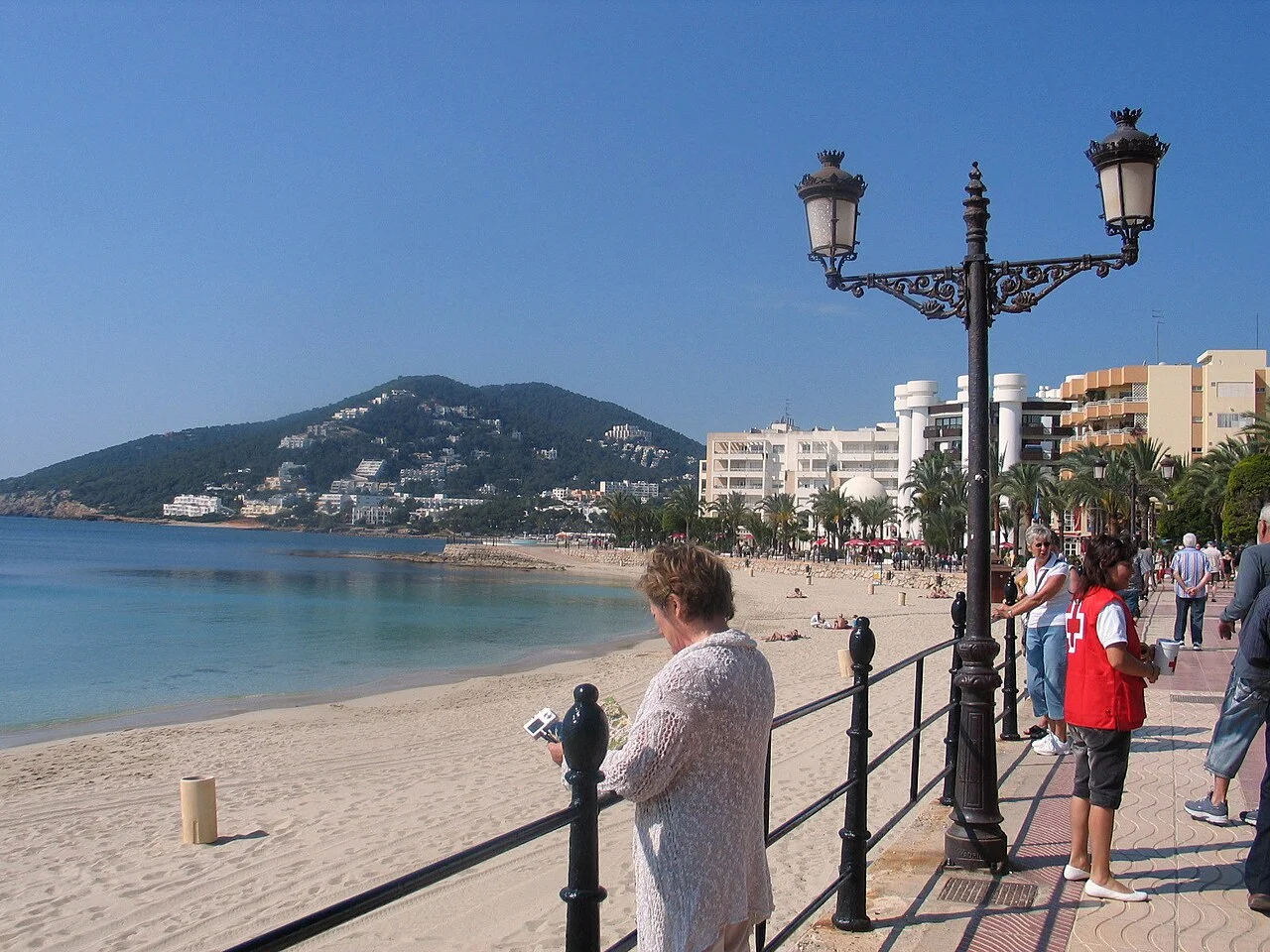
Below, the Passeig de s’Alamera, the seafront, the marina and the beach make one of the island’s most pleasant places to stroll all year round. It is a calm, family-friendly town with plenty of local life, and the May Festival is its big event.

Es Canar
Es Canar is a seaside village north of Santa Eulària, with a sandy beach and calm water popular with families, and a path linking the nearby coves.
This is home to Punta Arabí, the island’s longest-running hippy market, open on Wednesdays from April to October with crafts, clothes and music. Cala Nova and Cala Llenya are close by, and a coastal path leads to Santa Eulària.

Sant Carles de Peralta
Sant Carles de Peralta is the village of the north-east: a white church, a historic bar on the square and fields of olive and carob trees. In the 1960s it was one of the places where the hippies arrived, and some of that spirit is still in the air.
On Saturdays from February to November the Las Dalias market is held on the Santa Eulària road. From the village roads lead down to coves such as Cala Mastella, Cala Boix, Aigües Blanques and Cala Llenya. The village festival is in early November.

Santa Gertrudis de Fruitera
In the geographical centre of the island, Santa Gertrudis de Fruitera is a small village with a pedestrian square in front of the church, terraces, art galleries, design shops and antique dealers.
It is a meeting point for residents from all over the island, with schools, fields all around and a calm life all year. The patron saint festival is in mid-November.

Jesús
Jesús is just a couple of kilometres from Ibiza Town but keeps the feel of a village. Its 15th-century church of the Mare de Déu de Jesús holds one of the island’s artistic treasures: a Gothic altarpiece attributed to the Osona workshop of Valencia.
It is a residential area much sought after by people who work in town, with traditional bars and views over Talamanca bay and Dalt Vila.
Cala Llonga and Siesta
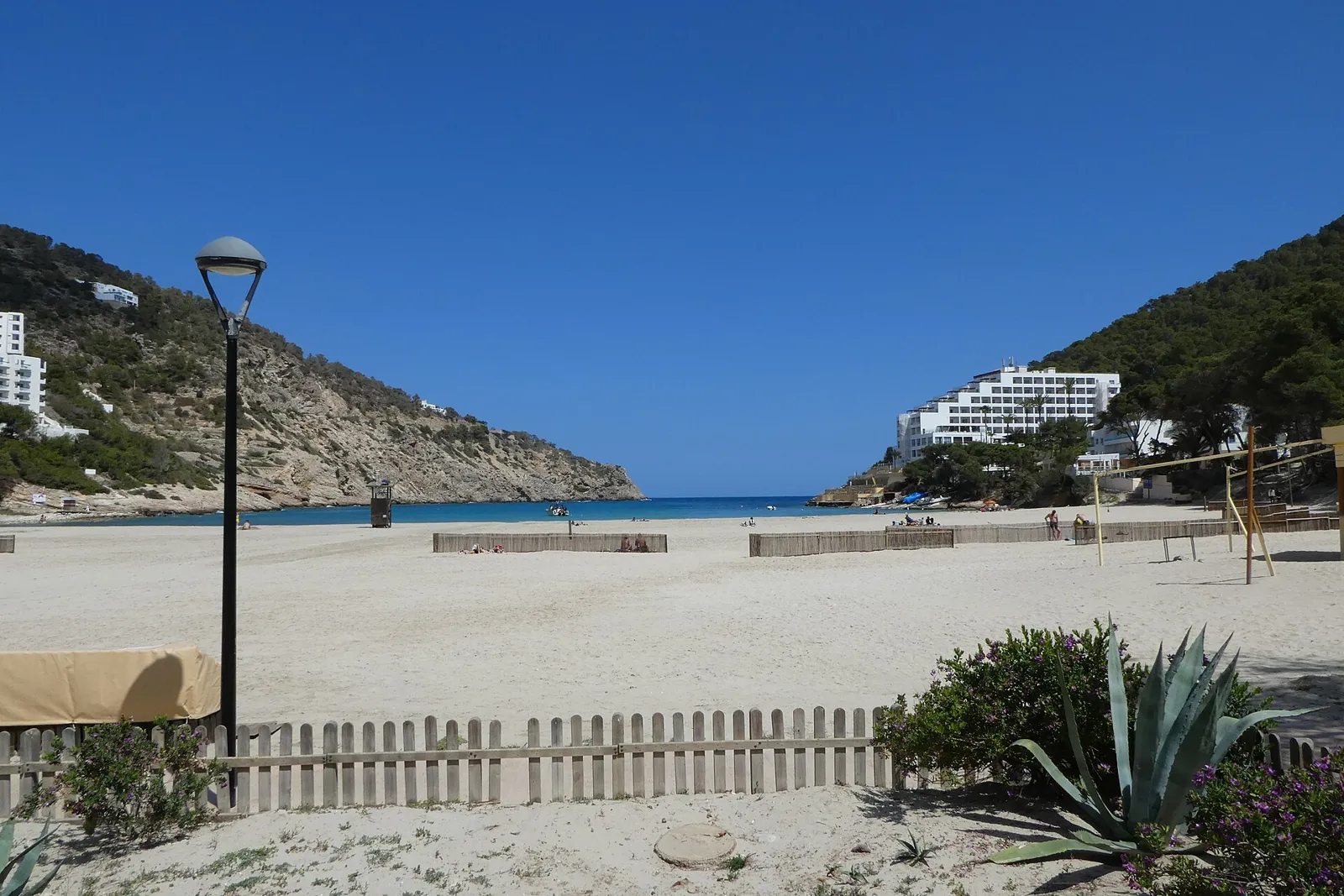
Cala Llonga is a narrow bay between pine-covered hills south of Santa Eulària, with a fine-sand beach and calm, shallow water, one of the easiest on the island for families with children.
Between Cala Llonga and Santa Eulària lies Siesta, a residential area by the sea with rocky coves and a coastal path. It is quiet outside summer and has buses to Santa Eulària and to town.
In town
Puig de Missa
The hill with the 16th-century fortified church, white houses and sea views. It was the town’s refuge from pirates.
Ethnographic Museum
In a farmhouse on Puig de Missa, with tools, costumes and Ibizan country life.
The river and old bridge
The Santa Eulària river gives the town its name; a riverside path leads to the old bridge.
Walks
Passeig de s’Alamera
The town’s boulevard, with terraces and a craft market in summer.
Promenade and marina
A long seafront walk to the marina.
Museu Barrau
Works by the painter Laureà Barrau, who lived and painted in Santa Eulària, next to Puig de Missa.
The villages
Sant Carles
A white church, the old village bar on the square and the Las Dalias market on Saturdays.
Santa Gertrudis
A pedestrian square with a church, galleries, shops and terraces, at the island’s geographic centre.
Jesús
The church of the Mare de Déu de Jesús holds a late 15th-century Gothic altarpiece.
Photos: Foto elegida por Eivissa Sí · A.Savin, Wikipedia (FAL) · Gerda Arendt (CC0) · DetFerMai (CC BY-SA 4.0) · stavros1 (CC BY 3.0) · Michael Parry (Public domain)